
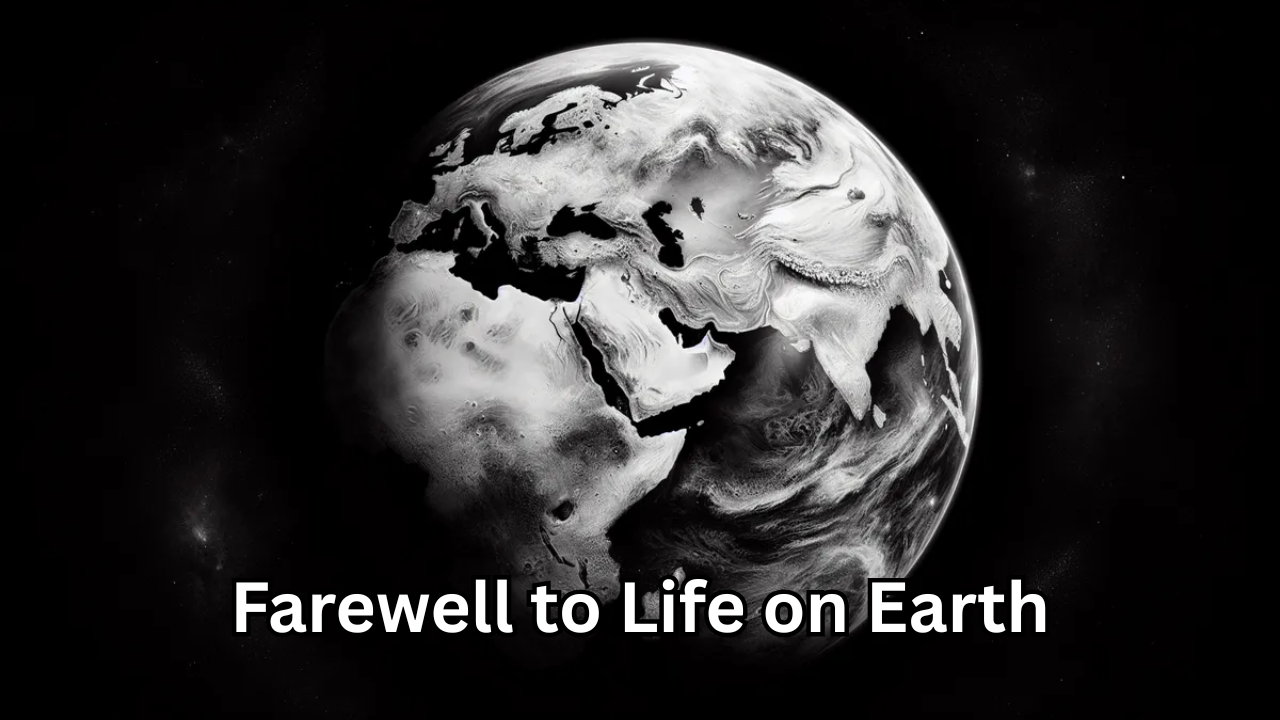
Understanding the Meaning Behind “Farewell to Life on Earth”
The phrase “farewell to life on earth” carries a deep and emotional weight. It can be interpreted in many ways depending on context—philosophical, environmental, scientific, or even symbolic. At its core, it reflects a moment of transition, a closing chapter, or a contemplation of humanity’s existence on this planet.
For some, it may represent the idea of humanity evolving beyond Earth, exploring new planets and expanding into the universe. For others, it might highlight concerns about environmental degradation, climate change, and the long-term sustainability of life on Earth. Regardless of interpretation, the phrase encourages reflection on where we come from, where we are now, and where we might be heading.
The Fragility of Life on Earth
Life on Earth, while incredibly diverse and resilient, is also surprisingly fragile. Our planet has experienced multiple mass extinctions, dramatic climate shifts, and natural disasters over billions of years. Despite these challenges, life has always found a way to adapt and survive.
However, in the modern era, human activity has significantly accelerated environmental changes. Deforestation, pollution, loss of biodiversity, and rising global temperatures are all pressing concerns. These issues have sparked global conversations about whether humanity is moving toward a future where a “farewell to life on earth” could become more than just a symbolic idea.
This does not necessarily mean the end of life, but it does highlight the urgency of preserving the delicate balance that sustains ecosystems across the planet.

Humanity’s Desire to Explore Beyond Earth
One of the most fascinating interpretations of “farewell to life on earth” is tied to space exploration. Humans have always looked toward the stars with curiosity and ambition. From the first moon landing to modern missions aimed at Mars, the dream of living beyond Earth is becoming more realistic.
Private companies and space agencies are investing heavily in technologies that could allow humans to establish colonies on other planets. Mars, in particular, has been a major focus due to its similarities to Earth. The idea is not necessarily to abandon Earth but to ensure the survival of humanity by becoming a multi-planetary species.
In this context, “farewell to life on earth” could symbolize a new beginning rather than an end—a bold step into the unknown.
Environmental Challenges and a Wake-Up Call
While space exploration offers hope, it also raises an important question: should we focus on leaving Earth, or should we prioritize saving it?
Climate change remains one of the biggest challenges facing humanity. Rising sea levels, extreme weather events, and changing ecosystems are already impacting millions of people worldwide. These issues are not distant possibilities—they are happening now.
The concept of bidding farewell to life on Earth can serve as a wake-up call. It reminds us that our actions today will determine the future of the planet. Sustainable practices, renewable energy, conservation efforts, and global cooperation are essential if we want to ensure that Earth remains a livable home for future generations.
Philosophical Reflections on Life and Existence
Beyond science and environment, “farewell to life on earth” also has a deeply philosophical dimension. It invites us to think about the meaning of life, our purpose, and our connection to the universe.
Human existence is temporary, but the impact we leave behind can be lasting. Cultures, innovations, relationships, and knowledge are all part of our legacy. Reflecting on a “farewell” encourages individuals to appreciate life more deeply, to value time, and to focus on what truly matters.
This perspective is not about fear or negativity. Instead, it is about awareness—understanding that life is precious and finite, and that every moment holds significance.
The Role of Technology in Shaping the Future
Technology is playing a crucial role in shaping what the future of life on Earth might look like. Advances in artificial intelligence, renewable energy, biotechnology, and space travel are opening new possibilities that were once considered science fiction.
For example, clean energy technologies are helping reduce our dependence on fossil fuels, while innovations in agriculture are improving food production in sustainable ways. At the same time, space technology is making interplanetary travel more achievable.
These developments suggest that the idea of a “farewell to life on earth” does not have to be negative. It could represent transformation, growth, and evolution. Humanity has the tools to address challenges and create a future that balances progress with sustainability.
Cultural and Artistic Interpretations
The concept of leaving Earth or saying goodbye to life on it has been explored extensively in literature, films, and art. From science fiction stories about interstellar travel to poetic reflections on human existence, this theme resonates across cultures.
These creative works often explore both hope and fear—the excitement of discovering new worlds and the sadness of leaving behind the familiar. They reflect our deepest emotions and questions about identity, belonging, and the unknown.
Art and storytelling allow us to imagine different futures, helping us prepare mentally and emotionally for possibilities that may one day become reality.

Preserving Earth for Future Generations
While it is important to explore new frontiers, preserving Earth should remain a top priority. This planet is uniquely suited to support life, and replicating its conditions elsewhere is incredibly challenging.
Efforts to protect natural resources, reduce pollution, and combat climate change are essential. Education and awareness also play a key role in encouraging individuals and communities to adopt more sustainable lifestyles.
A true “farewell to life on earth” should not come from neglect or destruction. Instead, it should be a conscious choice—one that comes only after we have done everything possible to protect and cherish our home.
A Balanced Perspective on the Future
It is easy to view the idea of leaving Earth in extreme terms—either as a necessary escape or an unnecessary risk. However, the reality is more balanced.
Humanity can pursue space exploration while also investing in environmental protection. These goals are not mutually exclusive. In fact, many technologies developed for space missions have applications that benefit life on Earth.
The future does not have to involve abandoning our planet. Instead, it can involve expanding our horizons while maintaining a strong connection to our origins.
Conclusion: What “Farewell to Life on Earth” Truly Means
“Farewell to life on earth” is a powerful phrase that invites reflection, curiosity, and responsibility. It is not just about endings—it is about possibilities, choices, and the direction humanity decides to take.
Whether viewed through the lens of environmental awareness, space exploration, or philosophical reflection, the message remains clear: our actions today shape tomorrow. Earth is our home, and its future depends on how we care for it.
Rather than seeing this concept as something distant or inevitable, it can be used as motivation. A reminder to protect what we have, explore what lies ahead, and create a future where life—on Earth and beyond—can thrive.
Also Read: Rebekah Vardy Property Sale: Inside the Luxury Homes, Listings, and Market Buzz
[…] Also Read: Farewell to Life on Earth: A Thoughtful Reflection on Humanity’s Journey […]