
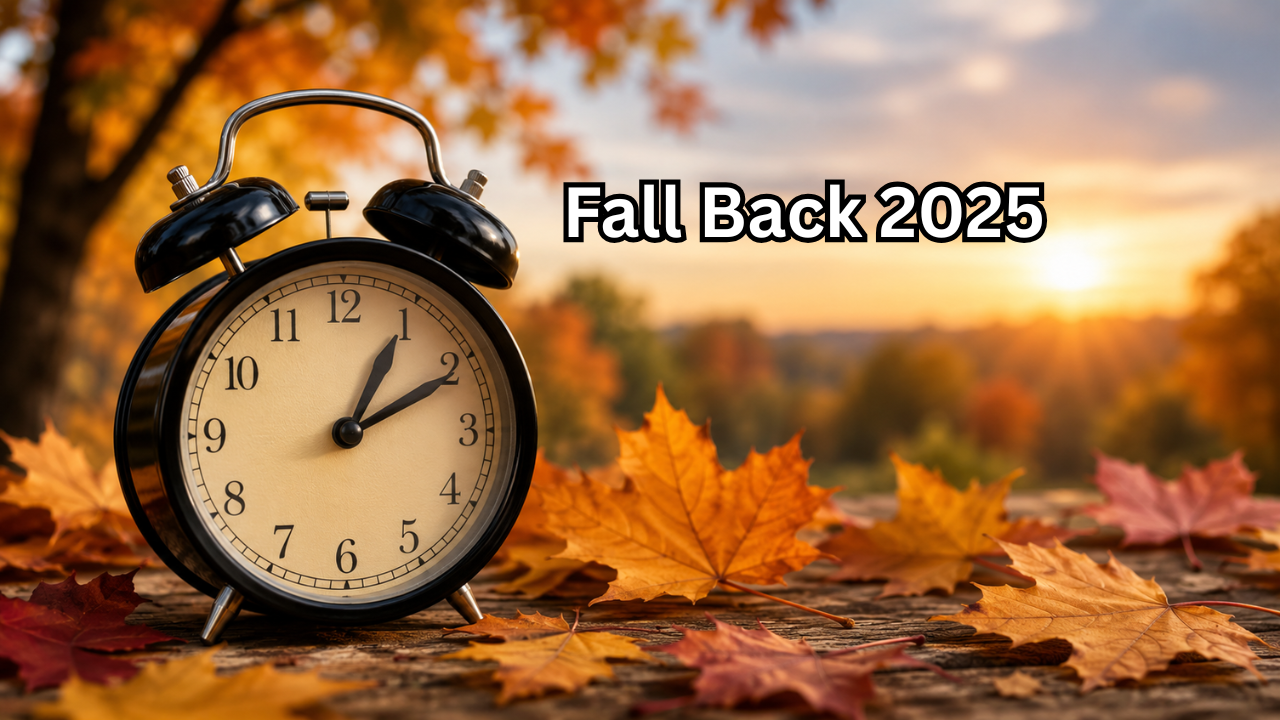
Fall Back 2025 – Every year, millions of people across the United States and many other countries adjust their clocks during the transition between daylight saving time and standard time. One of the most searched topics during the second half of the year is “fall back 2025” because people want to know exactly when the clocks change, why it happens, and how it affects daily life.
Understanding the fall back 2025 schedule can help you avoid missed appointments, disrupted sleep patterns, and confusion with work or travel plans. Whether you are preparing your home, organizing your schedule, or simply curious about daylight saving time, this guide explains everything in detail.
What Does Fall Back Mean?
The phrase “fall back” refers to the annual time change that occurs when clocks are turned backward by one hour during autumn. This transition marks the end of daylight saving time and the return to standard time.
The phrase is commonly remembered through the saying:
“Spring forward, fall back.”
In spring, clocks move ahead by one hour. In fall, clocks move backward by one hour.
During the fall back 2025 transition, people in participating regions will gain an extra hour of sleep because clocks are adjusted backward.
When Is Fall Back 2025?
In the United States, fall back 2025 will happen on Sunday, November 2, 2025.
At exactly 2:00 AM, clocks will move back one hour to 1:00 AM.
This means the hour between 1:00 AM and 2:00 AM occurs twice. Most digital devices such as smartphones, laptops, and smartwatches update automatically, but some manual clocks still need to be adjusted.
The time change officially marks the end of daylight saving time for 2025.
Why Do We Fall Back Every Year?
Daylight saving time was introduced to make better use of daylight during warmer months. By shifting clocks forward in spring and backward in fall, people can enjoy more daylight during evening hours.
The original idea behind daylight saving time included:
- Conserving energy
- Reducing electricity usage
- Increasing productivity
- Encouraging outdoor activity
- Supporting businesses during daylight hours
Although modern research debates how effective these benefits still are today, many countries continue to observe daylight saving time.
The History Behind Daylight Saving Time
The concept of adjusting clocks seasonally dates back centuries, but daylight saving time became more widely used during World War I and World War II to conserve fuel and energy.
In the United States, daylight saving time became standardized through the Uniform Time Act of 1966. Since then, the exact dates have changed several times, but the practice remains common in most states.
Not all states participate. For example:
- Hawaii does not observe daylight saving time.
- Most of Arizona also remains on standard time year-round.
Understanding the historical background of fall back 2025 helps explain why the system still exists despite ongoing debates.
How Fall Back 2025 Affects Sleep
One reason many people look forward to fall back 2025 is the extra hour of sleep. Unlike the spring time change, which causes people to lose an hour, the autumn adjustment provides an additional hour overnight.
However, even gaining an hour can temporarily affect the body’s internal clock.
Common effects include:
- Feeling tired earlier in the evening
- Waking up too early
- Temporary changes in concentration
- Mild mood shifts
- Adjustments to meal schedules
Most people adapt within a few days, but maintaining consistent sleep habits can make the transition easier.
Tips to Prepare for Fall Back 2025
Preparing in advance can help reduce stress and disruption during the time change.
Adjust Your Sleep Schedule Gradually
Try going to bed 15 to 20 minutes earlier for a few nights before the transition. This helps your body adapt more naturally.
Update Manual Clocks
Many devices update automatically, but you should still check:
- Wall clocks
- Microwave clocks
- Oven clocks
- Car dashboards
- Alarm clocks
Plan for Morning Darkness
After fall back 2025, mornings become brighter while evenings get darker earlier. If you drive or walk in the evening, consider reflective clothing or better outdoor lighting.
Check Travel Schedules
Time changes can create confusion for flights, online meetings, and international communication. Double-check schedules around the transition weekend.
Which Countries Observe Fall Back?
Not every country observes daylight saving time. Some countries use it regularly, while others have abandoned it completely.
Countries and regions that commonly observe fall back include:
- United States
- Canada
- Parts of Europe
- New Zealand
- Australia in selected regions
Many nations near the equator do not use daylight saving time because daylight hours remain relatively consistent throughout the year.
Will Daylight Saving Time Ever End?
One major discussion surrounding fall back 2025 involves whether daylight saving time should continue in the future.
Many lawmakers and experts have debated ending seasonal clock changes permanently. Supporters of ending daylight saving time argue that the transitions can negatively impact:
- Sleep quality
- Health
- Workplace productivity
- School performance
- Road safety
Several proposals have been introduced in the United States to make daylight saving time permanent or eliminate clock changes entirely, but no nationwide permanent decision has been fully implemented yet.
As of now, fall back 2025 is still scheduled normally.
How Businesses Prepare for Fall Back 2025
Businesses often make operational adjustments during daylight saving transitions.
Industries especially affected include:
- Airlines
- Transportation
- Healthcare
- Retail
- Financial markets
- Broadcasting
Companies may update schedules, software systems, and staffing plans to avoid disruptions caused by the repeated hour.
Online businesses also monitor traffic patterns because user behavior can change after the time adjustment.
Impact on Technology and Digital Devices
Modern technology has made the fall back process much easier than in the past.
Most devices automatically update their clocks through internet synchronization. However, problems can still occur if:
- Software is outdated
- Devices are disconnected from the internet
- Manual settings override automatic updates
Businesses with servers and global operations often prepare carefully for daylight saving transitions to prevent technical issues.
Health Effects Linked to Time Changes
Researchers have studied the effects of daylight saving transitions for years. While fall back is generally considered easier than spring forward, some health impacts can still occur.
Potential effects may include:
- Temporary sleep disruption
- Fatigue
- Reduced focus
- Changes in appetite
- Increased stress for shift workers
Experts recommend maintaining healthy routines around fall back 2025 to minimize any negative effects.
How Parents Can Help Children Adjust
Children often notice schedule changes more strongly than adults. Parents can make the transition smoother by:
- Keeping bedtime routines consistent
- Limiting screen time before bed
- Encouraging outdoor activity during daylight
- Preparing school routines early
A calm adjustment period can help children adapt more comfortably after the clocks change.
Common Myths About Fall Back 2025
There are many misconceptions surrounding daylight saving time.
Myth 1: Everyone Changes Their Clocks
Not all countries or regions observe daylight saving time.
Myth 2: Daylight Saving Time Was Created for Farmers
Contrary to popular belief, many farmers historically opposed daylight saving time because it disrupted agricultural schedules.
Myth 3: The Time Change Saves Huge Amounts of Energy
Modern studies show mixed results regarding energy savings. Advances in technology and changing lifestyles have reduced the original benefits.

How Fall Back 2025 Affects Work and Productivity
The time change can influence workplace performance temporarily. Some employees may feel more alert due to the extra hour of sleep, while others may struggle with routine changes.
Employers can help by:
- Encouraging consistent schedules
- Promoting healthy sleep habits
- Communicating schedule changes clearly
- Allowing flexibility during adjustment periods
Remote workers and international teams should pay special attention to meeting times during the transition.
Fall Back 2025 and Seasonal Changes
The end of daylight saving time also signals the approach of winter. Shorter evenings and cooler temperatures become more noticeable after the clocks change.
Many people use this period to:
- Prepare homes for colder weather
- Update seasonal routines
- Start holiday planning
- Focus on indoor activities
The transition often feels like the official start of the winter season for many households.
Why the Keyword “Fall Back 2025” Is Trending
Search interest for fall back 2025 increases every year as people prepare for the seasonal time change. Users commonly search for:
- Exact date and time
- Clock adjustment instructions
- Daylight saving information
- Sleep tips
- Work schedule updates
- Travel timing concerns
Because the topic affects millions of people, it remains highly relevant across search engines and social media platforms.
Final Thoughts
The fall back 2025 time change will occur on Sunday, November 2, 2025, when clocks move backward by one hour at 2:00 AM. While the adjustment may seem simple, it affects sleep, schedules, travel, businesses, and daily routines across many regions.
Understanding how daylight saving time works can help you prepare more effectively and avoid confusion during the transition. From improving sleep habits to checking digital devices and travel plans, small preparations can make the shift smoother.
As debates continue about the future of daylight saving time, millions of people will still participate in the annual tradition of turning their clocks back in fall 2025.
Also Read: Best Sonso Yuca Near Me: A Delicious Guide to Finding Authentic Flavor
[…] Also Read: Fall Back 2025: Everything You Need to Know About Daylight Saving Time Changes […]